
 SparxIT
 SPXCommerce
 What's Your A


eCommerce
AI & Analytics
What is Omnichannel Analytics? Unifying Online & Offline Data for Smarter Decisions
-
Vikash Sharma
- May 26, 2026
- 11 mins read

A customer buys a jacket from your physical store on Monday. A few days later, they browse winter boots on your website. On Friday, they see your retargeting ad while scrolling social media. On Saturday, they complete the purchase through your mobile app.
Your sales team records an in-store purchase. Your marketing team tracks an ad impression. Your ecommerce team sees an app conversion.
But none of these teams sees the complete customer journey.
This is one of the biggest problems modern businesses face. Customer data lives across multiple platforms, tools, and departments. As a result, businesses struggle to understand how customers move between online and offline channels before making a purchase.
According to a McKinsey report, 73% of consumers use multiple channels during their buying journey. Yet many businesses still measure each channel separately. This creates disconnected reporting, poor attribution, wasted marketing spend, and inconsistent customer experiences.
Omnichannel analytics solves this problem by bringing customer data from every channel into one unified view. It helps businesses track interactions across websites, mobile apps, physical stores, email campaigns, social media, and support channels in one place.
Instead of analyzing separate touchpoints, businesses can understand the complete customer journey and make smarter decisions backed by connected data.
In this guide, you will learn what omnichannel analytics is, why it matters, what it takes to build, and how to avoid the mistakes most teams make along the way.
What Is Omnichannel Analytics?
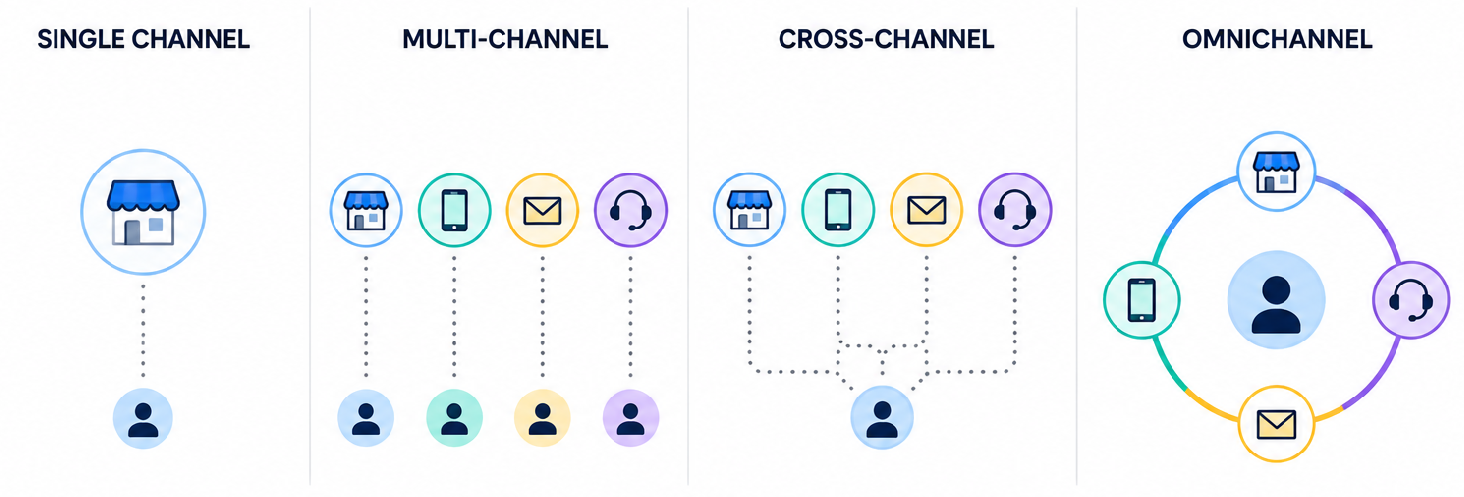
Omnichannel analytics is the process of collecting, connecting, and analyzing customer data across all online and offline channels. It gives businesses a complete view of how customers interact with their brand before making a purchase.
For example, a customer may:
- Discover a product through Instagram
- Visit your website later
- Compare prices on your mobile app
- Purchase the product from a physical store
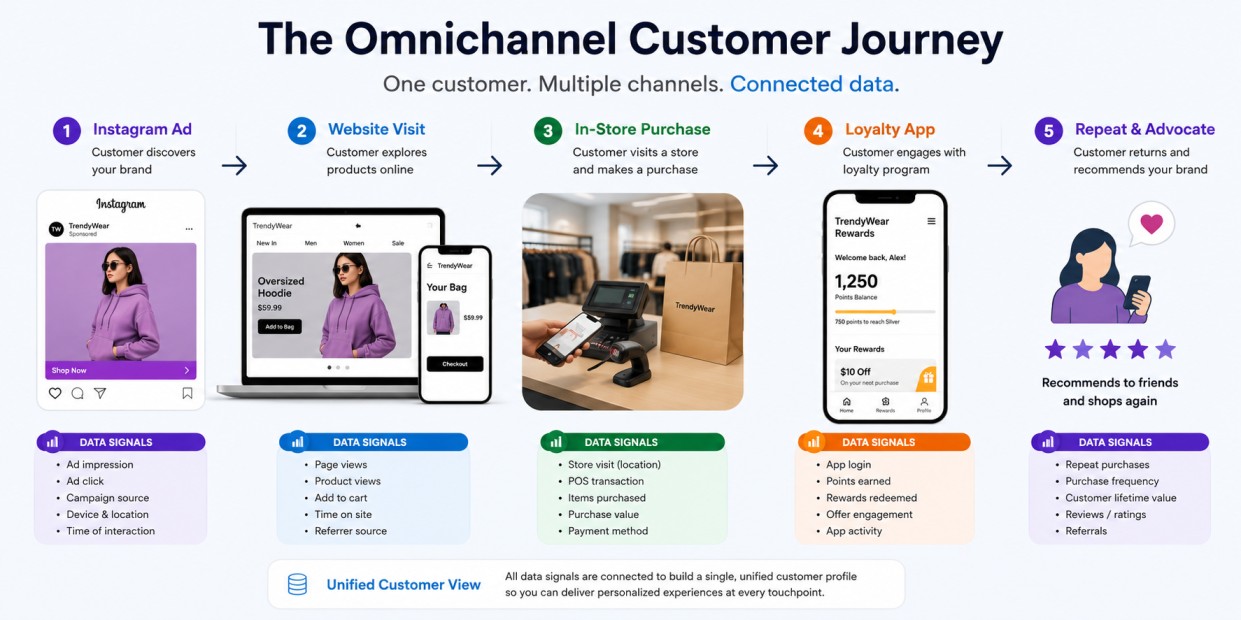
Traditional analytics tools often record these as separate interactions. Omnichannel data analytics connects them into one customer journey.
This unified customer view helps businesses:
- Understand customer behavior more accurately
- Track cross-channel buying patterns
- Improve personalization
- Measure marketing performance correctly
- Deliver consistent customer experiences
Unlike multichannel analytics, which measures channels independently, omnichannel ecommerce analytics focuses on how channels work together to influence customer decisions.
This approach helps businesses move beyond disconnected reporting and make faster, data-driven decisions backed by complete customer insights.
Why Businesses Can No Longer Ignore Data Silos
Data silos happen when customer information stays separated across different systems and departments. Your CRM stores one set of customer records, your ecommerce platform stores another, and your POS system tracks in-store purchases independently.
As a result, teams work with incomplete customer data.
For example:
- Marketing tracks email engagement
- Sales tracks purchase history
- Support tracks customer complaints
- Store teams track in-person transactions
But none of these teams sees the complete customer journey.
This disconnected approach creates several business problems:
- Inconsistent customer experiences
- Poor marketing attribution
- Duplicate reporting efforts
- Delayed decision-making
- Missed sales opportunities
A customer may browse products online, visit your store later, and complete the purchase through your mobile app. Without integrating online and offline data, these interactions appear unrelated.
This limits personalization and weakens customer engagement.
Omnichannel customer data solves this problem by creating a unified customer view. Businesses can track how customers move across channels, identify buying patterns, and deliver more relevant experiences at every stage of the journey.
Instead of relying on fragmented reports, teams can make faster, more accurate decisions by using connected data from all customer touchpoints.
Benefits of Omnichannel Analytics
Omnichannel analytics helps businesses understand how customers interact across different channels before making a purchase. Instead of analyzing isolated touchpoints, businesses get a connected view of the entire customer journey.
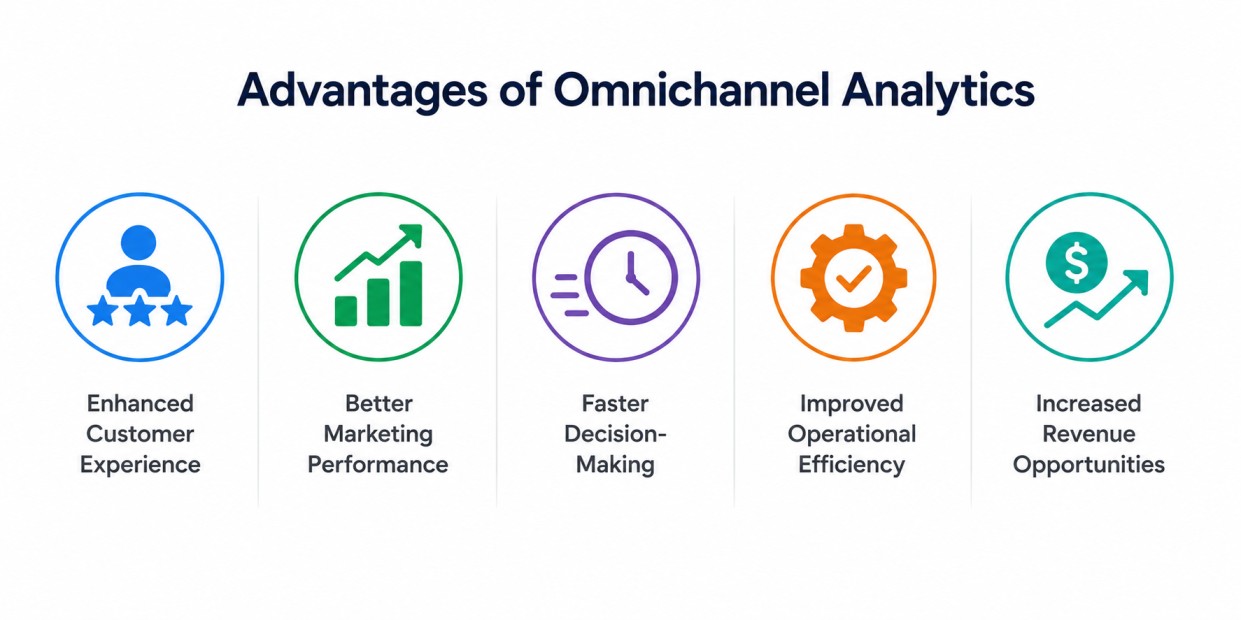
Here are the biggest benefits of omnichannel analytics:
-
Enhanced Customer Experience
Unified customer data helps businesses deliver consistent experiences across websites, mobile apps, physical stores, and support channels.
For example, a customer who recently purchased a product in-store can receive relevant recommendations online instead of seeing unrelated promotions. This level of personalization improves customer satisfaction and strengthens brand loyalty.
-
Better Marketing Performance
Omnichannel measurement helps businesses identify which channels contribute most to conversions. Instead of relying only on last-click attribution, teams can understand how ads, emails, social media, and offline interactions work together.
This improves budget allocation and reduces wasted marketing spend.
-
Faster Decision-Making
Disconnected reporting slows teams down. Omnichannel reporting brings data from multiple sources into one centralized view, making it easier for teams to track performance and respond quickly to customer trends.
Leaders can use conversational AI analytics to access accurate, real-time insights instead of relying on separate reports from different departments.
-
Improved Operational Efficiency
When systems share data, teams spend less time collecting spreadsheets and reconciling reports manually. Marketing, sales, operations, and support teams can work from the same data source.
This reduces duplicate work and improves collaboration across departments.
-
Increased Revenue Opportunities
Omnichannel ecommerce analytics helps businesses identify buying patterns across channels. A customer browsing products online after an in-store purchase signals potential cross-selling or upselling opportunities.
These insights help businesses increase customer lifetime value and improve retention over time.
Key Elements of Omnichannel Analytics
Omnichannel analytics depends on several connected components that help businesses unify, analyze, and act on customer data across channels.
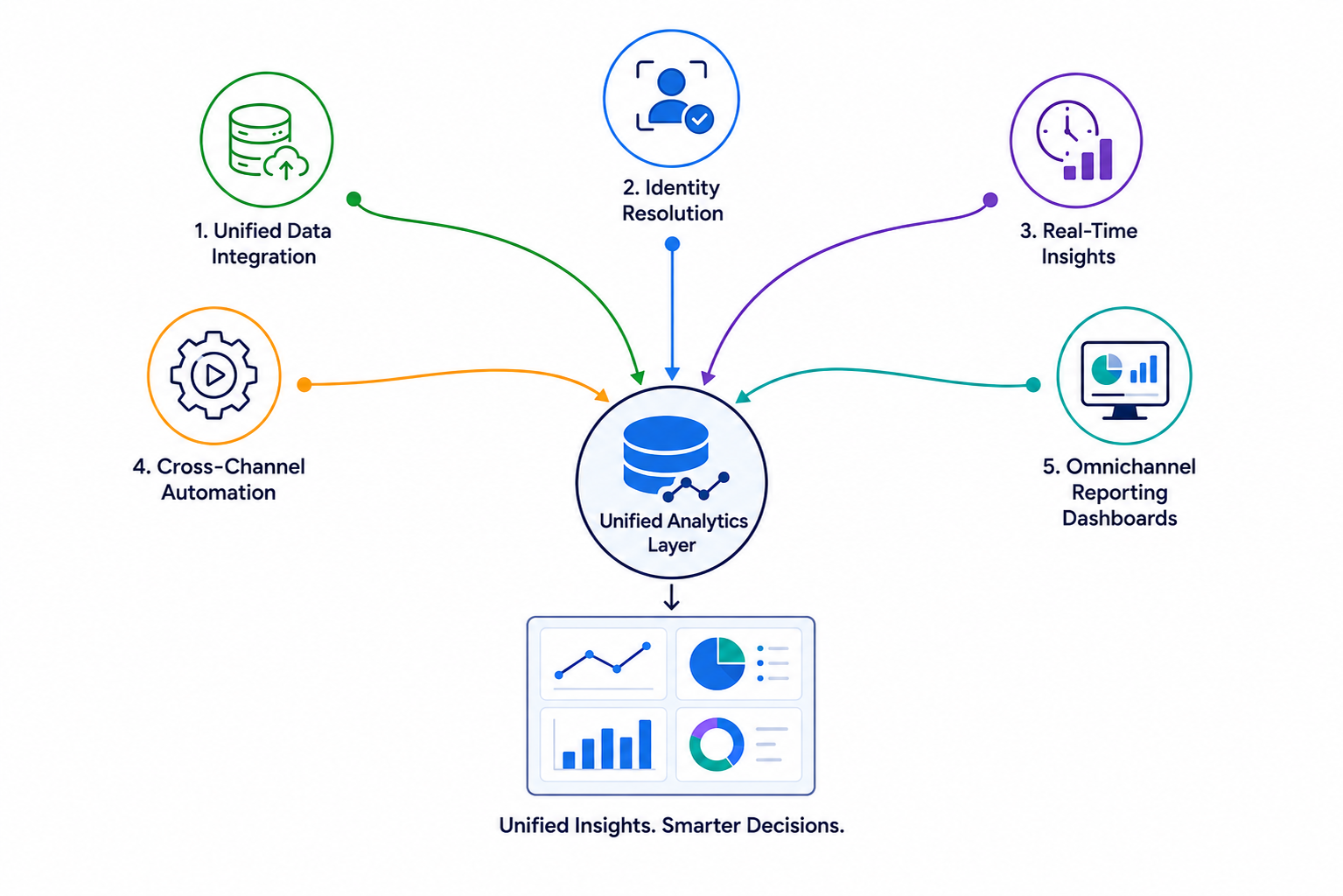
Here are the key elements that make an omnichannel analytics strategy effective:
-
Unified Data Integration
Unified data integration connects customer data from websites, mobile apps, CRM systems, POS platforms, email tools, and support channels into one centralized system.
This creates a consistent customer record across all touchpoints and improves integration of online and offline data.
-
Identity Resolution
Customers often interact with brands through multiple devices and channels before making a purchase. Identity resolution connects these interactions using identifiers like email addresses, phone numbers, loyalty IDs, or device data.
This helps businesses build a unified customer view instead of tracking disconnected activities.
-
Real-Time Insights
Real-time omnichannel analytics helps businesses monitor customer behavior in real time. Teams can quickly identify:
- Cart abandonment trends
- Changes in buying behavior
- High-performing campaigns
- Sudden traffic drops
Faster insights help businesses respond quickly and improve customer engagement.
-
Cross-Channel Automation
Once customer data is connected, businesses can automate actions across channels.
For example:
- Send reminder emails for abandoned carts
- Trigger personalized product recommendations
- Launch win-back campaigns for inactive customers
Automation improves customer experiences while reducing manual effort.
-
Omnichannel Reporting Dashboards
Different teams need different insights. An omnichannel ecommerce reporting dashboard helps marketing, sales, support, and leadership teams track performance using the same connected data source
This improves reporting accuracy and supports faster decision-making across departments.
Online and Offline Data Integration: Bridging the Gap
Many businesses track online and offline customer data separately. Website visits, email clicks, and app activity stay in one system, while in-store purchases, call center interactions, and POS data stay in another.
This creates incomplete customer insights.
Online and offline data integration connects these interactions into one unified customer journey. Businesses can track how customers move between digital and physical channels before making a purchase.
Online data typically includes:
- Website activity
- Mobile app interactions
- Email engagement
- Social media clicks
- Online purchases
Offline data includes:
- In-store purchases
- POS transactions
- Loyalty program activity
- Call center interactions
- Event participation
Businesses use tools such as Customer Data Platforms (CDPs), CRMs, and data warehouses to integrate this information and build unified customer profiles.
This integration helps businesses:
- Improve customer personalization
- Measure cross-channel performance accurately
- Track omnichannel KPIs more effectively
- Understand buying behavior across channels
- Deliver consistent customer experiences
Without connected data, businesses see only fragmented interactions rather than the complete customer journey.
Key Steps to Build Your Omnichannel Analytics Strategy
Building an effective omnichannel analytics strategy requires more than collecting customer data. Businesses need a structured approach that connects systems, defines clear goals, and improves data accessibility across teams.
Here are the key steps to build a successful strategy:
Step 1: Audit Your Existing Data Sources
Start by identifying where customer data currently exists. This may include:
- CRM platforms
- Ecommerce systems
- POS software
- Email marketing tools
- Website analytics
- Customer support platforms
This audit helps businesses identify disconnected systems, duplicate data, and missing customer insights.
Step 2: Choose a Unified Data Platform
Businesses need a centralized platform to connect online and offline customer data. Many organizations use Customer Data Platforms (CDPs), data warehouses, or AI-powered analytics platforms to unify information from multiple sources.
The goal is to create a single customer view accessible across departments.
Step 3: Define Your Omnichannel KPIs
Before building dashboards or reports, businesses should define the metrics that matter most. Common omnichannel KPIs include:
- Customer Lifetime Value (CLV)
- Customer retention rate
- Cross-channel conversion rate
- Attribution-adjusted ROAS
- Average order value
Clear KPIs help teams focus on measurable business outcomes instead of collecting unnecessary data
Step 4: Enable Cross-Channel Attribution
Customers rarely convert after a single interaction. Omnichannel attribution helps businesses understand how different channels contribute to conversions across the customer journey.
This improves marketing measurement and supports better budget allocation.
Step 5: Make Data Accessible Across Teams
Omnichannel analytics works best when teams can access insights easily. Marketing, sales, operations, and support teams should work with connected dashboards and reporting systems rather than isolated spreadsheets.
With self-service business intelligence, teams can access data independently, improve collaboration, and make faster business decisions.
Challenges in Implementing the Right Omnichannel Analytics Strategy
Omnichannel analytics helps businesses improve customer insights and decision-making, but implementation is not always simple. Many organizations struggle with disconnected systems, poor data quality, and limited cross-team collaboration.
Here are the most common challenges businesses face:
Challenge 1: Data Silos Across Departments
Different teams often use separate tools to manage customer data. Marketing uses one platform, sales uses another, and customer support tracks information elsewhere.
When systems do not share data, businesses struggle to create a unified customer view.
Challenge 2: Identity Resolution Issues
Customers interact across multiple devices and channels before converting. Accurately matching these interactions can be difficult, especially when customers use different email addresses, devices, or guest checkouts.
Poor identity resolution leads to incomplete customer profiles and inaccurate reporting.
Challenge 3: Privacy and Compliance Concerns
Businesses must comply with data privacy regulations such as the GDPR, the CCPA, and India’s DPDP Act when collecting and managing customer information.
As third-party cookies continue to decline, businesses need stronger first-party data strategies built around transparency and customer consent.
Challenge 4: Inaccurate Attribution Models
Many businesses still rely on last-click attribution, which gives full credit to the final interaction before a conversion.
This creates an incomplete view of customer behavior and can lead to poor marketing budget decisions.
Challenge 5: Low Data Accessibility
Even when businesses collect large amounts of customer data, teams often struggle to access or understand it. Complex dashboards and technical reporting systems slow decision-making and reduce adoption across departments.
Businesses need simple, accessible omnichannel reporting systems that non-technical teams can use confidently.
Omnichannel KPIs That Actually Matter
Tracking the right omnichannel KPIs helps businesses measure customer behavior, marketing performance, and revenue impact across channels. Instead of focusing solely on isolated metrics, businesses should monitor KPIs that capture the entire customer journey.
Here are the most important omnichannel KPIs to track:
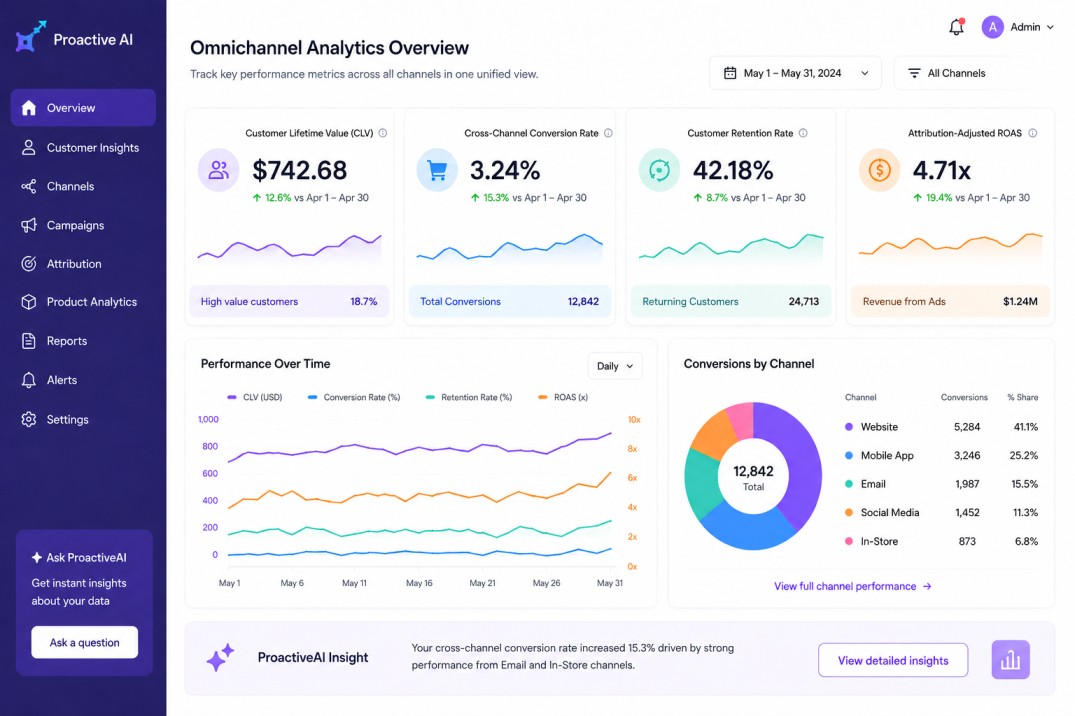
-
Customer Lifetime Value (CLV)
Customer Lifetime Value measures the revenue a customer generates over the course of their relationship with your business.
Omnichannel customer data improves CLV accuracy by combining purchases from online and offline channels into one customer profile.
-
Cross-Channel Conversion Rate
This metric measures how many customers interact with multiple channels before completing a purchase.
A strong cross-channel conversion rate indicates that your channels work together effectively throughout the buying journey.
-
Customer Retention Rate
Customer retention shows how well your business keeps customers engaged over time.
A drop in retention often signals issues like inconsistent customer experiences, poor personalization, or disconnected support across channels.
3. Attribution-Adjusted ROAS
Attribution-adjusted Return on Ad Spend measures how different marketing channels contribute to conversions across the customer journey.
Unlike last-click attribution, this approach gives businesses a more accurate understanding of marketing performance.
-
Average Order Value (AOV)
Average Order Value tracks how much customers spend per transaction across channels.
Omnichannel ecommerce analytics helps businesses identify upselling and cross-selling opportunities that increase overall order value.
-
Omnichannel Reporting Accuracy
Accurate omnichannel reporting ensures every department works from the same connected data source. This reduces reporting inconsistencies and improves decision-making across marketing, sales, and operations teams.
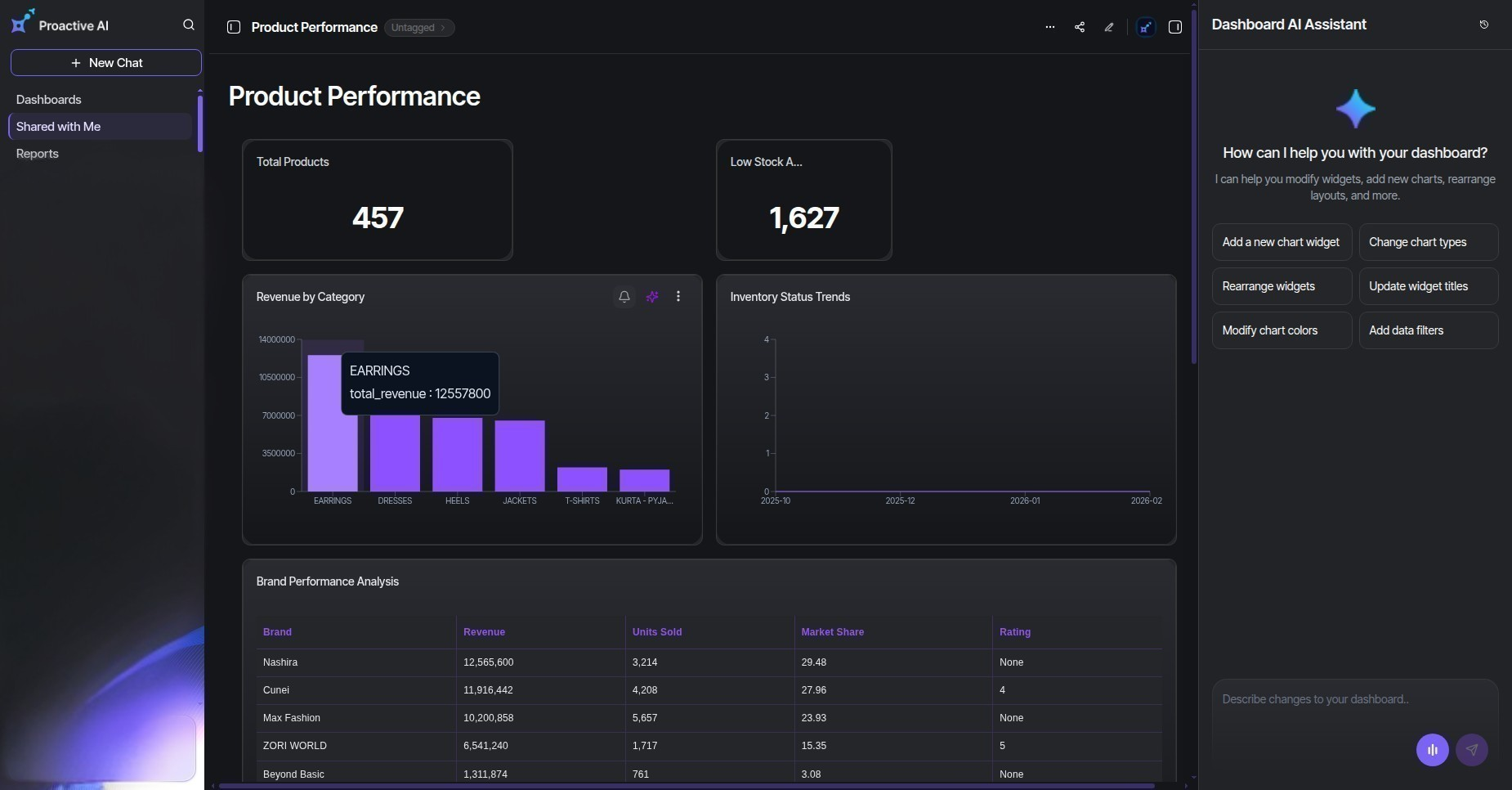
Omnichannel Attribution: Giving Credit Where It Is Due
Omnichannel attribution helps businesses understand which channels influence customer conversions across the buying journey.
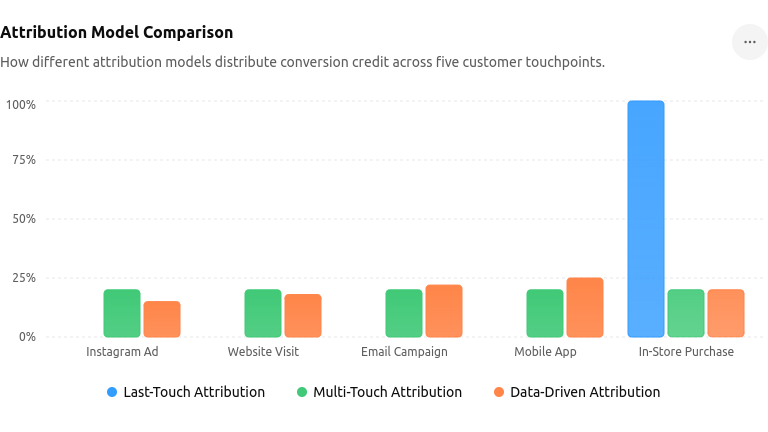
Customers often interact with multiple touchpoints before making a purchase. They may discover a product on social media, visit the website later, click on an email campaign, and finally purchase it through a mobile app or a physical store.
Without proper attribution, businesses cannot accurately measure marketing performance.
-
Last-Click Attribution
Last-click attribution gives full credit to the final interaction before a conversion. While simple, this model ignores the earlier touchpoints that influenced the customer’s decision.
-
Multi-Touch Attribution
Multi-touch attribution distributes credit across multiple customer interactions. This gives businesses a broader understanding of how channels work together throughout the customer journey.
-
Data-Driven Attribution
Data-driven attribution uses customer behavior data and machine learning to identify which touchpoints contribute most to conversions.
This model provides more accurate omnichannel measurement and helps businesses optimize marketing budgets more effectively.
Choosing the right attribution model improves omnichannel reporting, strengthens campaign analysis, and supports better business decisions across channels.
Tools That Power Omnichannel Data Unification
Businesses use multiple customer data unification tools to collect, connect, and analyze omnichannel customer data. The right technology stack depends on business size, data complexity, and reporting needs.
Here are the main tools that support omnichannel analytics:
-
Customer Data Platforms (CDPs)
CDPs collect customer data from multiple channels and create unified customer profiles. These platforms help businesses connect online and offline interactions in one centralized system.
Popular CDPs include Segment, Tealium, and mParticle.
-
CRM Systems
CRM platforms store customer relationship data such as purchase history, support interactions, and sales activity.
Integrating CRM systems with omnichannel analytics improves customer visibility across departments.
Popular CRM tools include Salesforce, HubSpot, and Zoho CRM.
-
Data Warehouses
Data warehouses store large volumes of customer and business data from multiple systems. Businesses use them to manage omnichannel reporting and advanced analytics.
Popular platforms include Snowflake, Google BigQuery, and Amazon Redshift.
-
AI-Powered Analytics Platforms
Businesses use AI-backed ecommerce sales forecasting tools to predict customer demand, identify revenue trends, and improve planning decisions across channels.
These platforms improve decision-making by turning complex customer data into actionable insights faster.
The right combination of tools helps businesses improve omnichannel measurement strategy, strengthen customer experiences, and make more informed business decisions.
Conclusion
Customers no longer interact with brands through a single channel. They move between websites, mobile apps, social media, physical stores, email campaigns, and support platforms before making a purchase.
Businesses that rely on disconnected reporting struggle to accurately understand this journey.
Omnichannel analytics solves this problem by connecting online and offline customer data into one unified view. It helps businesses improve personalization, measure marketing performance more accurately, track omnichannel KPIs, and make faster business decisions backed by connected insights.
As customer expectations continue to grow, businesses need analytics systems that provide complete visibility across every touchpoint.
Generate Omnichannel Insights with ProactiveAI
Understanding omnichannel analytics is only the first step. Businesses also need the right platform to turn connected customer data into actionable insights.
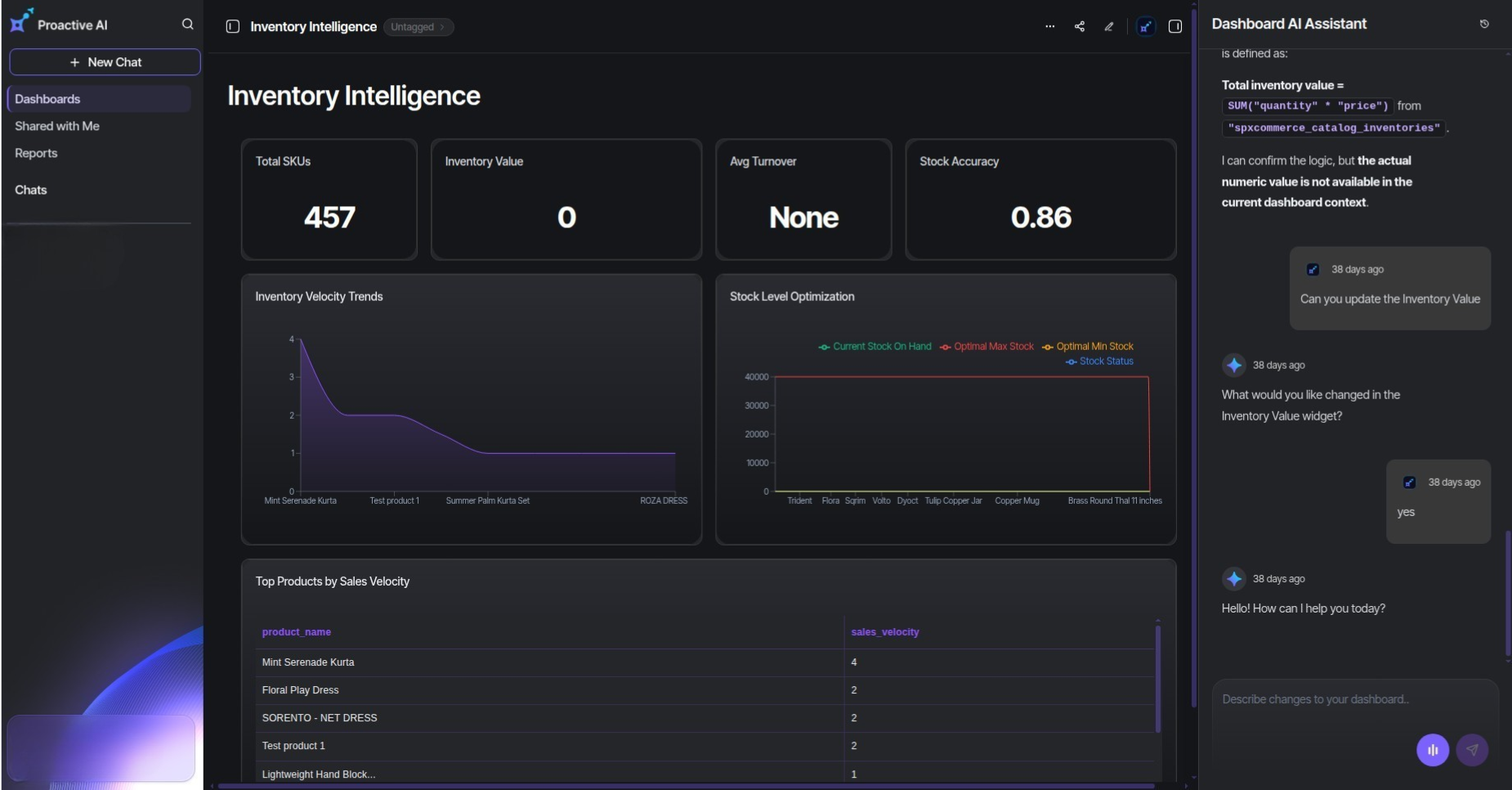
ProactiveAI helps ecommerce and B2B teams unify customer data, simplify omnichannel reporting, and improve decision-making through:
- Conversational AI analytics
- Pre-built ecommerce dashboards
- AI-powered forecasting
- Self-service analytics tools
Instead of managing disconnected reports across multiple systems, teams can access a centralized view of customer behavior, marketing performance, and revenue trends on a single platform.
Ready to unify your omnichannel data?
Book a free demo with ProactiveAI and discover how connected customer insights can improve business performance across every channel.
Frequently Asked Questions
What is omnichannel analytics?
Omnichannel analytics connects customer data from online and offline channels into one unified view. It helps businesses track the complete customer journey across websites, mobile apps, physical stores, email campaigns, and social media platforms.
How does omnichannel analytics differ from multichannel analytics?
Multichannel analytics measures each channel separately. Omnichannel analytics connects all channels together to show how customers interact across multiple touchpoints before making a purchase.
Why is online and offline data integration important?
Online and offline data integration helps businesses understand customer behavior across digital and physical channels. It improves personalization, marketing attribution, and customer experience consistency.
What are the most important omnichannel KPIs?
Key omnichannel KPIs include:
- Customer Lifetime Value (CLV)
- Cross-channel conversion rate
- Customer retention rate
- Attribution-adjusted ROAS
- Average Order Value (AOV)
These metrics help businesses measure customer engagement and marketing performance more accurately.
What tools help businesses manage omnichannel analytics?
Businesses commonly use Customer Data Platforms (CDPs), CRM systems, data warehouses, and AI-powered analytics tools to unify customer data and improve omnichannel reporting.
You might also like
Handpicked articles for your reading list.

Get the latest insights on Conversational AI
Stay ahead of the curve with weekly updates on data analytics, AI trends, and eCommerce growth strategies delivered straight to your inbox.
Join 5,000+ industry leaders. Zero spam, just pure insights.